Showing posts with label los angeles. Show all posts

Thursday, May 9, 2013

Succulent Gardens


Try taking a walk outside in your neighborhood. You'll probably notice that Southern California has a growing penchant for succulents, and for good reason. These colorful and sculpturally fascinating plants thrive in dry climate conditions making them suitable for Southern California weather. Not to mention they are easy to care for.

 
Succulents flourish in desert conditions due to their fleshly leaves and stems that retain moisture. They may be low maintenance, but like any tended plant they require attention. Tania Gybels of Environmental Concept provides a few helpful and essential guidelines on maintaining a lush succulent garden. Succulents do not need frequent watering or good soil. However they do require adequate drainage to maintain the soil's dryness in between watering. This will successfully recreate the arid climate that succulents blossom upon. They enjoy basking in the sun and can tolerate the shade. It is imperative to stay cautious of water usage when leaving succulents in the shade.


Pots can be great homes for any succulent, and they will benefit from the visually striking appearance of these plants. The abstract colors and shapes of succulents can create a defined border for landscapes. Yucca, Agave, and Aloe are great additions that will complement a succulent landscape. These plants have a desert flair and are a hip addition to any California home or landscape.
 

Founded in 1992, Environmental Concept provides landscape design and installation services to the finest residential and commercial properties in Southern California. Environmental Concept has completed projects for the Spelling Mansion, Dustin Hoffman, Roland Emmerich, 3.1 Philip Lim Boutique, the Ambrose Hotel, Sunset Millennium Shopping Center, Hotel Casa del Mar and the Aquarium of the Pacific. Environmental Concept has been featured on HGTV and Oprah. For more information about Environmental Concept visit www.envconcept.com

Friday, March 29, 2013

Rose Gardens: Pretty in Pink!


The woody perennial Rose has over 100 different species that range in color from white to reds, pinks, and yellows. Although roses have been grown in China for over a thousand years, the founder of the modern rose garden as we know it today was Empress Josephine de Beauharnais, wife of Napoleon Bonaparte. Josephine’s lifelong patronage helped to popularize the rose as a common garden plant. Between the years of 1799 and 1814, she employed a horticulturist with a passion for roses named Andre Dupont and as a result developed a great personal interest in and knowledge of gardens and roses. Josephine formed the first written history of rose cultivation and hosted one of the first ever rose exhibitions in 1810. By her death in 1814, her garden included over 250 varietals. Thirty years after her death, the rose variety Souvenir de la Malmaison, originally cultivated at the Chateau de Malmaison, was named in her honor by a Russian Grand Duke and was one of the first planted in the Imperial Garden in St. Petersburg.


Even beginning gardeners can successfully cultivate roses. In California, February is the best time to plant, and gardeners should wait until longer stalks are more readily available to prune. Drastic pruning should be done after the blooming season is finished. According to expert horticulturist and garden designer Tania Gybels of Environmental Concept, the best way to feed your roses is with horse manure, alfalfa meal, and fish powder. Tania also cautions against excessive water and dampness in your rose garden as the buildup of water on leaves can encourage the growth of mildew fungi that impairs the plant’s ability to photosynthesize. The mildew is identifiable by its white or gray powdery splotches on leaves and stems. Regular thinning and pruning improves air circulation to prevent excessive water buildup, and a simple fungicide can help clear up any contamination. To safeguard against pests like aphids Tania recommends using a fertilizer rich in phosphorus and potassium such as bone meal, instead of a traditional nitrogen-rich fertilizer.

 
One of Tania’s favorite pink roses is the Cape Cod variety. The Cape Cod rose grows as a shrub and is perfect to integrate into your garden landscape. The beautiful, bright pink flowers are the reason why so many people, like Tania, love to grow roses.

###

Founded in 1992, Environmental Concept provides landscape design and installation services to the finest residential and commercial properties in Southern California. Environmental Concept has completed projects for the Spelling Mansion, Dustin Hoffman, Roland Emmerich, 3.1 Philip Lim Boutique, the Ambrose Hotel, Sunset Millennium Shopping Center, Hotel Casa del Mar and the Aquarium of the Pacific. Environmental Concept has been featured on HGTV and Oprah. For more information about Environmental Concept visit www.envconcept.com


Tuesday, October 23, 2012

Herb Gardening!


When designing herb gardens I start by making a sun/shade study of the site to determine the best location for my plot. There is usually a need for some type of dividing element or screen, so pineapple and strawberry guava provide a nice natural element for the purpose, as well as giving back to us in the form of the their delicious fruit.

Once my beds are laid out to my satisfaction, I start with the basic herbs that any chef would need; Italian parsley, sweet basil, rosemary, oregano and thyme. Mint is also a basic but should be kept in a pot as it can become invasive.

Some of the more unusual choices I like to incorporate are: tasoi, black kale, winter savory and sorrel. Tatsoi is used as a micro green and is a member of the cabbage family. Black kale has a smooth rich texture and is a nice alternative to green kale. Black kale makes a tasty salad using lemon and olive oil.
Founded in 1992, Environmental Concept provides landscape design and installation services to the finest residential and commercial properties in Southern California. We are known for our specialty gardening and work closely with our clients to create personalized outdoor environments that are beautiful, functional and sustainable.

 All images copyright 2012 Sarah Barnard.

Wednesday, April 28, 2010

Walk Through Wednesday - Santa Monica Mediterranean

It's time for Walk Through Wednesday again! This week, Environmental Concept is featuring our Santa Monica Mediterranean landscape.


Rich and luxurious landscaping greets guests at this Santa Monica property.
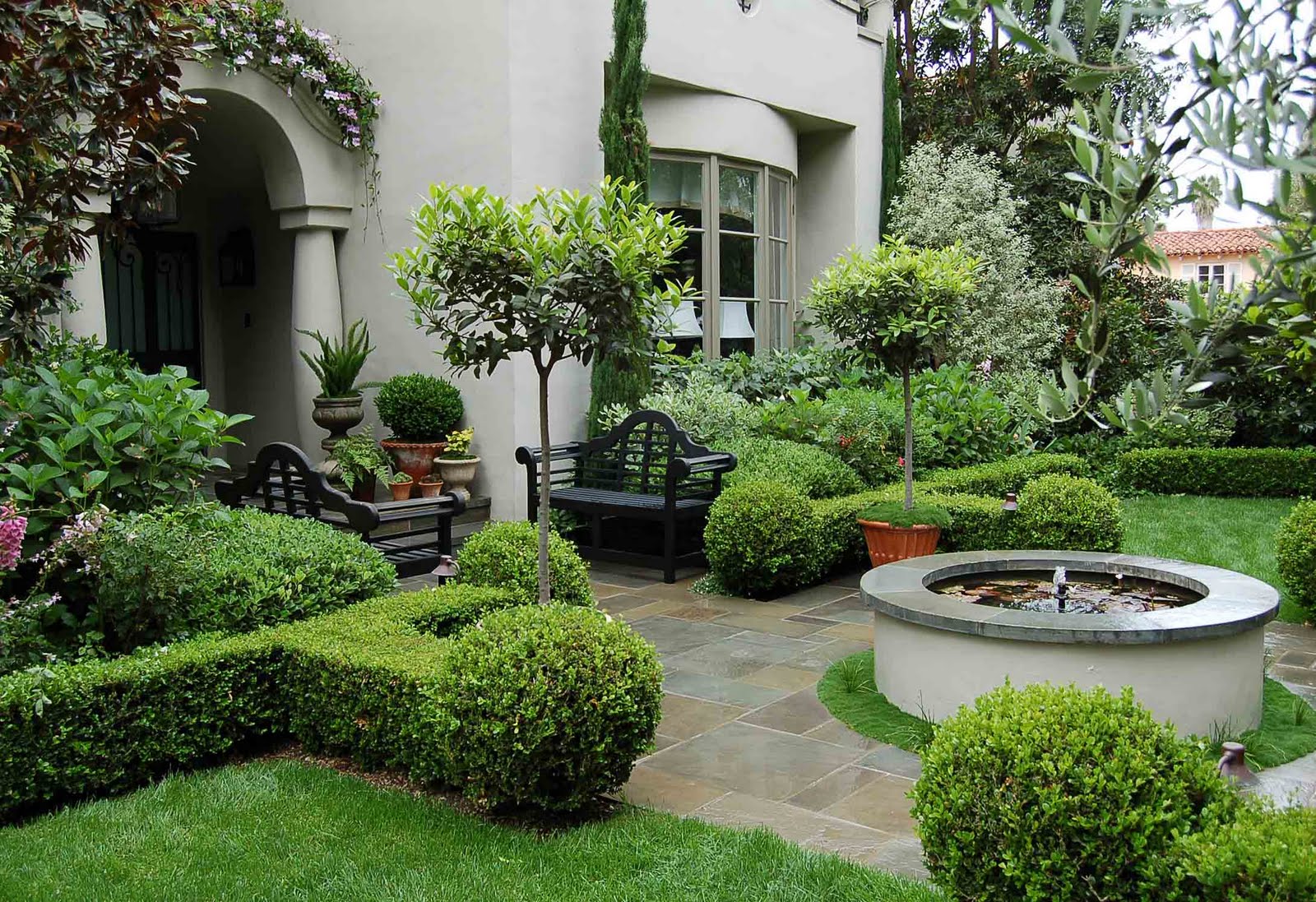
A mixture of a water feature, hedges and native plants create the perfect seating at the front entrance.
Rich and luxurious landscaping greets guests at this Santa Monica property.

An illuminated fountain at dusk.

Taking the mix and match approach, this driveway combines Cecile Brunner Roses, trellises and bluestone in an ashlar pattern.

This cozy outdoor fireplace provides the ideal setting for family time.
A waterfall pours into a custom built swimming pool.
Exquisite lighting and tall hedges form privacy and ambiance.

###
Environmental Concept’s philosophy is based upon a goal to restore, beautify & preserve California’s natural spaces for future generations. With a diverse team of professionals, Environmental Concept works to increase awareness about water conservation & sustainable eco-systems using mainly microdrip & weather-based irrigation controllers. For more information, please visit www.envconcept.com.

Tuesday, April 20, 2010

Creating an Outdoor Living Area


The best way to create an effective outdoor living space is to analyze the wants and needs of the client and their family and match those necessities to specific solutions. Do they have children? Are there pets? What is the purpose of their landscape? Environmental Concept believes that every client is individual. Every situation and family that we have encountered has been different, but for the most part, the common factor is a wanting a comfortable livable space and outdoor extension of their home.


If the main purpose of the outdoor area is for entertaining, create a focal point by incorporating a fire pit or built-in kitchen for company to gather around. Aim for inviting.


The landscaped area should welcome guests to stay a while. Plan for the amount of guests your client typically accommodates.


If possible, use versatile seating arrangements.


Don’t limit your outdoor living space to only hardscaped terrain. Hardscape typically designates common areas and walkways, but consider permeable paving. Sprouting greens between the pavers not only feels great under your feet, it also allows water to drain to the soil below.


Work with the natural beauty of the environment by letting the terrain and region make decisions. Native planting incorporates indigenous vegetation that thrives in local areas. In turn, native plants require less water and maintenance than typical landscapes.


Always apply inspiration from the home’s architecture and design to the outdoor and stay true to the original style.

###
Environmental Concept’s philosophy is based upon a goal to restore, beautify & preserve California’s natural spaces for future generations. With a diverse team of professionals, Environmental Concept works to increase awareness about water conservation & sustainable eco-systems using mainly microdrip & weather-based irrigation controllers. For more information, please visit www.envconcept.com.

Wednesday, January 13, 2010

Rose pruning in Los Angeles

It’s that time of year again in Los Angeles for all of us rose enthusiasts. Yes it’s time for our annual winter/spring rose pruning.

The pruning of rose bushes can be confusing, especially when you start talking about hybrid teas, old garden roses, shrub roses, once-blooming roses, and English roses.


The class of rose and the time of year it blooms influence the type and amount of pruning. General pruning principles apply to all roses, but there are differences between classes. The closer one gets to species roses the less severe the pruning. Hybrid teas have the distinction of requiring the most severe pruning for optimum bloom and plant health.

Because of the variety of rose types available, one may need to have an understanding of how the rose flowers. Pruning should also be looked at as applying a few common sense principles to accomplish several tasks. These tasks are to remove dead, damaged, or diseased wood; increase air circulation; keep the shrub from becoming a tangled mess; shape the plant; and encourage the growth of flowering wood. Always prune above a bud that faces outward on the plant. That way, when the plant re-sprouts, it will grow outward. This improves air circulation throughout the plant, which decreases the occurance of blackspot and other fungal diseases.

Always remove old or diseased canes at the bottom of the plant. (Rose stems are called canes.)
Remove crossing stems from within the plant. They will either rub together, opening a spot for disease to enter the plant, or will grow together, making future pruning difficult.


What some people don’t realize is that different types of roses require different types of pruning. While hybrid tea roses benefit from a hard cut leaving just a hard wood fan, many heirloom roses need much less branch cutback and really only require a general thinning and shape. Here are some examples of how certain varieties should be pruned for winter/spring growth.


Hybrid teas

Start by cutting all old rose canes to the ground.
Move on and shorten the entire shrub by 1/3.
Next, remove any crossing branches.
Make sure you prune to an outward-facing bud. This is especially important with the teas.

Floribundas
Repeat-flowering shrub roses bear flowers on mature stems that are not old and woody. Severe pruning of these roses would result in reduced flower production. In their first two or three seasons in the garden, shrub roses can be left unpruned. Wait to see what shape develops and then try to prune so that the shape is maintained. Many modern shrub roses are pruned by a method called the "one-third" method. Suggested pruning sequence:
In the spring, remove one-third of the very oldest canes. This helps keep the plant from becoming an overgrown thicket of poor-flowering canes.
Replace these canes by identifying about one-third of the very youngest canes that grew the previous season.
Remove the remaining canes.


Rose climbers and ramblers
Climbers and ramblers may need a few seasons in the garden before pruning is necessary. In many cases, pruning is limited to removing winter-damaged wood. Pruning is similar for both classes. The difference is in the timing. Because ramblers are once-blooming, they are pruned right after flowering in early summer. Because climbers are repeat bloomers, they are pruned in early spring. Reducing the side shoots or laterals to 3-6 inches stimulates flower production, resulting in more blooms. Training canes to grow more horizontally encourages the growth of bloom producing side shoots.


Old Garden roses such as roses, alba, gallica, bourbon, centifolia, damask,eglantine, moss , noisette etc
These roses are pruned much like modern shrub roses with some important considerations based on class. Old once-blooming roses such as Alba, Gallica, Centifolia, Damasks, and Mosses produce flowers on old wood, all pruning should be delayed until after flowering. Then, you do as little or as much pruning as is required to maintain the plant. Thinning and removing old wood is encouraged. These roses may not need annual pruning if there is no dead or damaged wood present.

Last but certainly not least, always prune about 1/4" above an outward facing leaf which has five leaflets. See below to note difference between the three leaflet and five leaflet leaf.


###
Environmental Concept provides earth-friendly landscape services to fine residences and commercial properties in Los Angeles, California. Tania Gybels brought her unique perspective to the world of Los Angeles horticulture in 1991. Her work has been featured on HGTV and Oprah. For more information, please visit www.envconcept.com.

Wednesday, December 9, 2009

Environmental Concept- Earth Friendly Landscaping & Gardening


Environmental Concept, a Los Angeles based landscape company provides landscape design, installation, and maintenance services to some of the finest homes and commercial spaces in Southern California.

Gardening & Horticulture

Planting

Hardscapes

Irrigation

Storm Water Management

Water Features such as pool, water falls, spas and fountains.

Outdoor Lighting

Exemplary personalized services such as: butterfly gardens, aquatic gardens, medicinal gardens, antique rose gardens, organic culinary gardens, organic fruit orchards, custom pet habitats and event staging.

Some sustainable practices include-

Water efficient landscaping

Roof top gardens and plant-able driveways

Restoration of natural plant material and habitat

Solar heated and saline swimming pools.

To learn more about Environmental Concept or to request an appointment visit http://www.envconcept.com/ or call 310-302-9292